Scroll through any crypto trading forum and you will see the same story repeated again and again: a trader buys after a massive green candle, convinced the rally has just begun… and within minutes the market dumps. Sound familiar? This frustrating pattern isn’t bad luck. It’s usually the result of ignoring crypto market microstructure analysis and focusing only on candles instead of liquidity and institutional behavior. Markets move because orders interact inside the order book, not because a candle suddenly turns green.
Understanding institutional order flow crypto completely changes the way traders read charts. Instead of reacting emotionally to momentum, traders begin to recognize where big money is positioning crypto, how institutional stop loss clusters crypto attract price movement, and why certain levels repeatedly act as magnets for price. Once you start analyzing smart money market structure crypto, those random-looking spikes begin to make sense.
Why Retail Traders Keep Chasing Green Candles
The majority of retail traders are trained to react to visible price movement. When a large bullish candle appears, it triggers a fear of missing out. Social media amplifies the excitement. Charts look strong, indicators flash buy signals, and traders rush into the market believing they’ve discovered momentum. Unfortunately, without understanding trading structure using order flow, that momentum often represents the end of a move rather than the beginning.
This behavior is exactly what institutional traders expect. Large participants often push price into areas where institutional stop loss clusters crypto accumulate. Once liquidity gathers, they can execute larger orders without moving the market too aggressively. Retail traders chasing green candles effectively provide the liquidity institutions need. What looks like a breakout on the chart may actually be a liquidity sweep designed to trigger orders before price moves the opposite direction.
When traders begin applying crypto market microstructure analysis, they stop viewing price candles as isolated events. Instead, they start asking better questions: Where is liquidity concentrated? Where might large traders reload positions? What levels attract price repeatedly? These insights reveal institutional liquidity zones crypto, which are far more informative than simple support and resistance lines drawn on a chart.
Understanding Crypto Market Microstructure Analysis
At its core, crypto market microstructure analysis studies how orders interact inside the market. Every trade represents a transaction between buyers and sellers, but large participants cannot simply place massive orders without affecting price. Instead, they distribute orders across liquidity zones, allowing positions to build gradually. This process creates recognizable footprints that traders can observe through institutional order flow crypto.
These footprints often appear near levels where liquidity clusters. For example, a sudden spike into a previous high may trigger stop orders placed by traders who were short. Those stop losses create buy orders that large players can sell into, allowing them to reduce long positions or initiate shorts. Observing this behavior helps traders identify institutional reloading zones, areas where institutions repeatedly build or adjust positions.
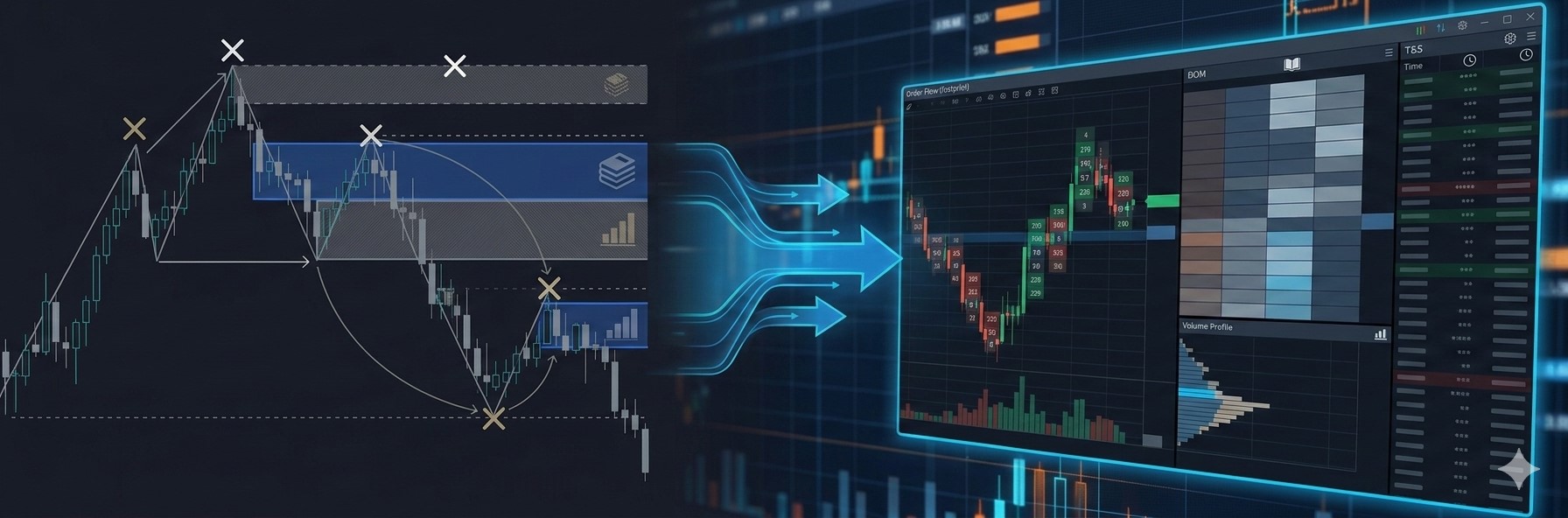
When traders visualize these dynamics, the market begins to look less chaotic. What once seemed like random volatility turns into a structured environment shaped by liquidity flows. Tools designed for SMC price magnets visualization reveal how price tends to gravitate toward areas with concentrated orders. Once traders recognize these magnets, they stop reacting emotionally to price spikes and start anticipating where the market is likely to move next.
How Smart Money Concepts Software Reveals Institutional Positioning
Modern trading platforms increasingly incorporate smart money concepts software designed to highlight liquidity levels and structural market behavior. Instead of forcing traders to guess where institutional activity occurs, these tools visualize data derived from order flow and market structure. For traders who want clarity rather than guesswork, SMC trading tools crypto provide an entirely different perspective on price action.
One of the most powerful capabilities offered by these tools is visualizing SMC liquidity levels in real-time. By mapping where orders accumulate, traders can observe how price interacts with liquidity pockets across different timeframes. This allows them to see institutional stop loss clusters crypto forming around obvious highs, lows, and consolidation zones. Rather than entering trades randomly, traders can wait for price to approach these levels and watch how order flow behaves.
Identifying Institutional Reloading Zones Before Trend Expansion
Perhaps the most valuable insight provided by SMC trading tools crypto is the ability to identify institutional reloading zones. These zones represent areas where large participants quietly accumulate positions before a new trend expansion begins. Price may appear to move sideways in these regions, but beneath the surface institutions are preparing for the next directional move.
Once traders understand where these zones exist, the market suddenly feels much less unpredictable. Instead of chasing breakouts, they wait for price to return to liquidity-rich areas where institutional order flow crypto is likely to reappear. In many cases these areas act as SMC price magnets visualization zones that repeatedly attract price before the next impulse move unfolds.
Step-by-Step: Trading Structure Using Order Flow Instead of Emotions
Transitioning from emotional trading to structured analysis does not require complicated strategies. In fact, the process becomes simpler once traders begin focusing on liquidity and market structure. The first step involves identifying the broader smart money market structure crypto. By analyzing swing highs, swing lows, and consolidation areas, traders can determine whether institutions are accumulating, distributing, or trending.
The second step focuses on mapping institutional liquidity zones crypto. These areas often appear near previous highs, lows, or consolidation ranges where stop orders accumulate. When price approaches these zones, traders watch carefully for signs of institutional activity. This is where traders often identify institutional reloading zones and anticipate the next directional move.
The final step is confirmation through SMC trading tools crypto and order flow behavior. Instead of reacting instantly, traders wait for clear signals that institutions are defending a level or absorbing liquidity. When this confirmation appears, the trade becomes aligned with professional market participants rather than retail momentum. This approach helps bridge the gap between SMC theory and real-time data, transforming abstract concepts into practical trading decisions.
Markets reward patience and punish emotional reactions. Traders who rely only on candles often fall into the trap of buying late moves and selling panic dips. But those who embrace crypto market microstructure analysis gain a deeper understanding of how price truly moves. By studying institutional order flow crypto, mapping institutional liquidity zones crypto, and learning to identify institutional reloading zones, traders stop chasing candles and start trading structure. And once you see the market through the lens of liquidity, you realize something powerful: the chaos wasn’t random at all. It was simply the footprint of smart money all along.